
Alternative Investment Guide: Precious Metals, Cryptocurrency, and Rare Coins
Traditional investment portfolios built exclusively on stocks and bonds face increasing challenges in an era of currency debasement, geopolitical instability, and technological disruption. Central banks printing trillions of dollars, negative real interest rates, and concerns about financial system stability have driven sophisticated investors toward alternative assets that exist outside conventional financial infrastructure.
This comprehensive guide explores three distinct alternative investment categories—precious metals, cryptocurrency, and rare coins—examining their historical performance, strategic role in portfolios, practical acquisition methods, and realistic risk profiles. Whether you're a conservative investor seeking portfolio insurance or an aggressive speculator pursuing asymmetric returns, understanding these alternatives provides options beyond mainstream financial markets.
Why Consider Alternative Investments?
Before diving into specific asset classes, understanding why alternatives matter helps clarify their strategic purpose.
Portfolio Diversification Beyond Stocks and Bonds
Traditional 60/40 stock-bond portfolios face unprecedented challenges. When both stocks and bonds decline simultaneously (as they did in 2022), conventional diversification fails. Alternative assets often move independently of traditional markets, providing genuine diversification rather than false comfort.
Correlation matters more than most investors realize. If all your holdings move together, you're not diversified—you're concentrated. Precious metals, cryptocurrency, and collectibles have historically shown low or negative correlations with stock markets during certain periods, though these relationships aren't static or guaranteed.
Inflation Hedge Characteristics
Inflation silently erodes purchasing power. A dollar today buys less than it did a decade ago, and significantly less than several decades ago. Assets with finite supply or tangible value can preserve wealth better than cash during inflationary periods.
Gold has maintained purchasing power over centuries—an ounce of gold bought a quality suit in ancient Rome and still does today. Bitcoin advocates argue limited supply (21 million maximum) creates similar dynamics. These arguments have merit but aren't guarantees; context and timing matter enormously.
Systemic Risk Protection
What happens if your bank fails? If your brokerage goes bankrupt? If government capital controls restrict money movement? Physical assets you personally control (gold bars in a safe, rare coins in storage) exist outside the financial system. Cryptocurrency operates independently of traditional banking infrastructure.
This "counterparty risk" elimination appeals to those concerned about financial system stability. You're not trusting institutions to honor claims—you directly own assets. The tradeoff is assuming custody risk yourself, which brings security challenges most people underestimate.
Asymmetric Return Potential
Some alternative investments offer lottery-ticket dynamics: limited downside (you can only lose 100%) but theoretically unlimited upside. Bitcoin demonstrated this from 2010-2021, turning hundreds into millions for early adopters. Rare coins occasionally appreciate 10x-100x when collector demand surges for specific issues.
However, survivorship bias distorts perceptions. For every Bitcoin success story, thousands of altcoins went to zero. For every rare coin that appreciated dramatically, countless others stagnated or declined. Asymmetric opportunities exist but require skill, timing, and luck.
Precious Metals: The Traditional Alternative
Gold and silver have served as money and wealth preservation for thousands of years. Unlike fiat currencies that can be printed infinitely, precious metals have physical scarcity enforced by geology and mining economics.
Gold: The Ultimate Store of Value
Historical Performance and Market Context

Gold's performance over the past decade reflects its role as crisis hedge rather than growth investment. The chart above shows significant volatility, with a dramatic surge in 2020 as COVID-19 triggered unprecedented monetary stimulus. Gold doesn't grow earnings or pay dividends—its value derives entirely from scarcity and collective agreement it's worth something.
The 2020 spike to above $2,000 per ounce demonstrated gold's safe-haven appeal during maximum uncertainty. As markets stabilized and real interest rates rose in 2021-2022, gold retreated. The relationship between gold prices and real interest rates (nominal rates minus inflation) is crucial: when cash pays positive real returns, holding non-yielding gold becomes less attractive.
Gold has averaged roughly 8-10% annual returns over very long periods (decades), though with substantial volatility. It's not a get-rich-quick investment but rather wealth preservation against currency debasement and financial system instability.
Why Investors Buy Gold
Inflation protection: When currency purchasing power declines, gold typically maintains value. The 1970s demonstrated this dramatically as gold surged from $35 to $850 per ounce amid double-digit inflation.
Central bank hedging: Major central banks hold thousands of tons of gold as reserves, providing a floor under demand. When institutions that create money choose to hold significant gold reserves, that signals something about confidence in pure fiat systems.
Geopolitical uncertainty hedge: During wars, political crises, or financial system stress, gold demand increases as people seek assets outside vulnerable systems.
Portfolio diversification: Gold often moves opposite to stocks during market crashes, providing ballast when equities decline. However, this relationship isn't perfectly reliable—sometimes both decline together.
How to Invest in Gold
Multiple approaches exist, each with tradeoffs:
Physical gold bullion: Buying actual gold bars or coins provides direct ownership without counterparty risk. You can hold it, store it, and it can't be hacked or confiscated easily (unless someone physically takes it). Disadvantages include storage costs, insurance, and illiquidity—you can't sell a fraction of a gold bar easily. Popular options include American Gold Eagles, Canadian Maple Leafs, or PAMP Suisse bars. Learn more in our detailed guide: Physical Gold Investing
Gold ETFs: Exchange-traded funds like GLD or IAU track gold prices without requiring physical storage. Advantages include easy buying/selling through brokerage accounts and no storage concerns. Disadvantages include management fees (typically 0.4-0.5% annually), counterparty risk (you're trusting the ETF actually holds gold), and lack of direct ownership.
Gold mining stocks: Companies that mine gold provide leveraged exposure—when gold prices rise 10%, mining stocks might rise 20-30% (or vice versa). However, you're also exposed to company-specific risks like management quality, mining accidents, political risks where mines operate, and operational challenges unrelated to gold prices.
Digital gold platforms: Services like Kinesis or GoldMoney allow buying gold stored in vaults, claimable on demand. This combines benefits of physical ownership with digital convenience but reintroduces counterparty risk.
Silver: The Affordable Precious Metal
Historical Performance and Unique Characteristics

Silver exhibits much higher volatility than gold, as the chart demonstrates. It surged above $40 in 2011, crashed to $14, recovered, and continues significant swings. This volatility stems from silver's dual nature: it's both an industrial metal (used in electronics, solar panels, medical applications) and a monetary metal (investment demand, jewelry).
The gold-to-silver ratio (how many ounces of silver equal one ounce of gold) fluctuates from 40:1 to 100:1, providing trading opportunities for those who understand the relationship. When the ratio reaches extremes (say 100:1), silver is historically cheap relative to gold and vice versa.
Silver's Industrial Demand Driver
Unlike gold (primarily monetary), over 50% of silver demand comes from industrial applications. Solar panels require substantial silver, and as renewable energy expands, industrial demand could support prices. Electronics manufacturing consumes silver for conductivity. Medical uses leverage silver's antibacterial properties.
This industrial demand means silver correlates somewhat with economic growth. During recessions, industrial demand drops, pressuring prices. During growth periods, increased manufacturing supports silver even if investment demand is weak.
Investment Strategies for Silver
Silver's lower price per ounce makes it accessible for smaller investors. You can buy meaningful quantities of physical silver for hundreds rather than thousands of dollars. However, this creates storage challenges—$10,000 of silver weighs far more than $10,000 of gold.
Popular physical forms include American Silver Eagles, Canadian Maple Leafs, or generic silver rounds/bars from reputable mints. Premiums over spot price (the fabrication and dealer markup) range from 10-30% depending on product and market conditions. Explore silver investing further: Silver Bullion Guide
Silver ETFs like SLV provide exposure without physical storage. Mining stocks offer leverage, with companies like First Majestic Silver or Pan American Silver providing pure-play exposure to silver prices.
Other Precious Metals Worth Considering
Beyond gold and silver, platinum, palladium, and rhodium offer investment opportunities with unique supply-demand dynamics.
Platinum: Historically more expensive than gold, platinum has reversed that relationship recently. Used primarily in catalytic converters for diesel vehicles, its demand declined as diesel fell out of favor in passenger cars. However, hydrogen fuel cell applications could drive future demand. Full analysis: Platinum Bullion Investing
Palladium: Essential for gasoline vehicle catalytic converters, palladium prices surged to over $3,000/oz in 2022 before declining as electric vehicle adoption threatens long-term demand. Highly volatile and speculative. Learn more: Palladium Investment Guide
Rhodium: The most volatile precious metal, rhodium skyrocketed from $1,000 to $30,000 per ounce before crashing. Used in catalytic converters with limited substitutes, it's dominated by South African supply. Extremely speculative with limited investment products available. Details: Rhodium Market Analysis
Practical Precious Metals Portfolio Allocation
Conservative investors might allocate 5-15% of portfolios to precious metals, primarily gold with some silver. This provides insurance without excessive allocation to non-productive assets.
More aggressive strategies could go 20-30% in precious metals, including speculation in platinum/palladium based on specific supply-demand theses. However, recognize you're betting against productive assets (businesses) in favor of commodities that generate no cash flow.
Physical vs. paper allocation depends on objectives. If you're primarily hedging financial system risk, physical metals you control make sense. If you're simply seeking price exposure as portfolio diversification, ETFs work fine with less hassle.
Cryptocurrency: The Digital Frontier
Cryptocurrency represents the newest alternative asset class, with Bitcoin launching in 2009. The technology promises decentralized, censorship-resistant digital money, though reality has proven more complex than early utopian visions.
Bitcoin: Digital Gold or Speculative Bubble?
Historical Performance Analysis

Bitcoin's price trajectory defies comparison to traditional assets. From pennies to nearly $70,000, then crashes of 80%+, then recoveries—Bitcoin has been the highest-performing asset over the past decade and simultaneously one of the most volatile.
The chart shows multiple boom-bust cycles: the 2017 rush to $20,000, crash to $3,000, recovery to $69,000 in 2021, crash to $16,000 in 2022, and subsequent recovery. Each cycle brought predictions of Bitcoin's death, followed by new all-time highs.
This volatility stems from Bitcoin's nature as a purely speculative asset with no cash flows, no central authority, and value determined entirely by collective agreement. It's simultaneously described as the future of money and a worthless Ponzi scheme, with passionate advocates on both sides.
The Bitcoin Investment Case
Fixed supply: Only 21 million Bitcoin will ever exist, enforced by cryptography and consensus rules. This hard cap theoretically makes Bitcoin the ultimate scarce asset, immune to debasement unlike fiat currencies central banks print at will.
Decentralization: No government, company, or individual controls Bitcoin. This appeals to those concerned about centralized power, financial censorship, or currency manipulation. Bitcoin transactions can't be blocked or reversed by authorities.
Digital portability: You can memorize 12 words (a seed phrase) and access Bitcoin anywhere with internet connectivity. This enables wealth preservation across borders without physical transport vulnerabilities.
Network effects: Bitcoin's first-mover advantage and largest network make it the default cryptocurrency. More users, more miners, more infrastructure, and more liquidity create a self-reinforcing cycle difficult for competitors to overcome.
The Bitcoin Skeptic's Case
No intrinsic value: Bitcoin generates no earnings, pays no dividends, and has limited real-world utility beyond speculation. It's valuable only because people believe it's valuable—pure greater fool theory.
Extreme volatility: Losing 80% of value multiple times makes Bitcoin unsuitable as money (which requires stability) or safe haven (which requires predictability). It correlates with risk assets, rising and falling with stocks rather than acting as crisis hedge.
Regulatory uncertainty: Governments could ban Bitcoin or regulate it heavily. China banned mining and trading. The US could implement harsh restrictions if Bitcoin threatened dollar dominance.
Environmental concerns: Bitcoin mining consumes enormous electricity, drawing criticism as wasteful. While miners increasingly use renewable energy, the perception problem persists.
Better alternatives emerging: Ethereum, Solana, and other cryptocurrencies offer additional functionality beyond Bitcoin's simple ledger. Bitcoin's maximalist position may erode as technology evolves.
For comprehensive Bitcoin and cryptocurrency fundamentals: Understanding Cryptocurrency
Ethereum: Smart Contracts and Digital Infrastructure
Performance and Positioning

Ethereum mirrors Bitcoin's volatility but represents fundamentally different value proposition. Rather than digital gold, Ethereum provides infrastructure for decentralized applications, DeFi (decentralized finance), and NFTs.
Ethereum's 2022 transition to proof-of-stake reduced energy consumption 99.95% and created deflationary dynamics through fee burning. Whether this translates to long-term value appreciation remains uncertain, but it addressed key criticisms.
Ethereum Investment Thesis
Ethereum could become the settlement layer for future digital economy, similar to how TCP/IP protocols underpin the internet. If DeFi, tokenization, and decentralized applications proliferate, Ethereum's network effects position it as infrastructure backbone.
However, competing blockchains offer faster speeds and lower fees. Ethereum's first-mover advantage and developer ecosystem provide moat, but technology advantages erode over time. This makes Ethereum higher risk/reward than Bitcoin.
Cryptocurrency Investment Strategies
Bitcoin maximalism: Allocating entirely to Bitcoin based on belief it's the only cryptocurrency with genuine staying power. This approach avoids altcoin risk but forgoes potential upside from other projects.
Bitcoin/Ethereum split: Combining Bitcoin's monetary properties with Ethereum's utility/growth potential. Common allocation is 70/30 or 80/20 Bitcoin/Ethereum, balancing established store-of-value with emerging platform play.
Diversified crypto portfolio: Including altcoins like Solana, Cardano, Polygon, etc. This maximizes exposure to potential winners but requires substantial research and monitoring. Most altcoins will likely fail long-term.
Dollar-cost averaging: Given extreme volatility, spreading purchases over time reduces timing risk. Buying fixed dollar amounts monthly (say $100-500) regardless of price builds positions without trying to time bottoms.
Taking profits systematically: Setting price targets where you sell portions of holdings preserves gains and prevents riding prices back down. Many Bitcoin holders failed to take profits in 2021 and watched gains evaporate in 2022.
Cryptocurrency Risks and Realities
The crypto market is filled with scams, hacks, and catastrophic failures. FTX's collapse wiped out billions. Countless altcoins are pump-and-dump schemes. Security requires technical knowledge most people lack.
Security challenges: If you lose your private keys or seed phrase, your crypto is gone forever. No customer service can recover it. Phishing attacks, malware, and physical robbery (the "$5 wrench attack") threaten holdings.
Exchange risk: Keeping crypto on exchanges exposes you to hacks and bankruptcy. Mt. Gox, FTX, and others proved "not your keys, not your coins." Self-custody with hardware wallets is essential for significant holdings but requires careful setup.
Tax complexity: Every crypto transaction creates taxable events. Trading between cryptocurrencies, spending crypto, even moving between wallets can trigger gains/losses requiring reporting. This administrative burden surprises many investors.
Psychological challenge: Can you hold through 80% drawdowns? Most people can't, selling at bottoms and buying at tops. Crypto volatility tests conviction and emotional discipline like no other asset.
Deep dive into crypto investment approaches: Cryptocurrency Investment Guide
Recommended Cryptocurrency Allocation
For most investors, cryptocurrency should represent 1-5% of total portfolio at most. The volatility and risk make larger allocations dangerous unless you're young, wealthy enough to lose it all, or extremely convicted.
Within crypto allocation, heavily weighting Bitcoin (60-80%) with some Ethereum (20-30%) and perhaps small altcoin positions (0-10%) provides balanced exposure. Avoid chasing hot new tokens or believing in unlimited upside—thousands of cryptocurrencies will go to zero.
Never invest in crypto with money you need for essential expenses, retirement, or that you can't afford to lose completely. Treat it as a speculation that might pay off tremendously or might disappear entirely.
Rare Coins: Tangible Collectibles with Investment Potential
Numismatics—coin collecting—combines historical interest, artistic appreciation, and investment potential. Unlike bullion valued purely by metal content, rare coins derive value from scarcity, condition, historical significance, and collector demand.
Historical Performance of Rare Coins
Market Overview Since 1970
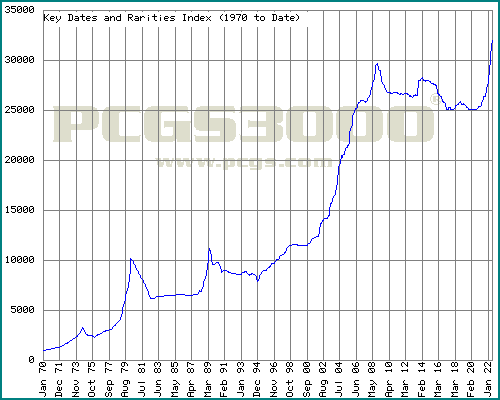
The rare coin market has demonstrated steady appreciation over decades, though with periodic corrections. The 1989-1991 crash devastated speculators but quality rarities recovered. The 2008 financial crisis temporarily depressed prices before recovery.
Top-tier rarities (finest-known examples, famous historical pieces) have shown remarkable appreciation. A 1794 Flowing Hair Dollar sold for $10 million in 2013. A 1933 Double Eagle sold for $7.6 million in 2002 and $18.9 million in 2021. These are outliers, but they demonstrate potential.
What Drives Rare Coin Values?
Rarity: Mintage figures, survival rates, and available population in various grades determine scarcity. A coin with 100 known examples in pristine condition will be more valuable than one with 10,000.
Condition: Professional grading services (PCGS, NGC, ANACS) assign numerical grades from 1-70. The difference between MS-64 and MS-65 can double a coin's value. Highest-grade examples command enormous premiums.
Historical significance: Coins from important periods, with interesting backstories, or representing firsts/lasts of a series command premiums beyond pure rarity. The first coin of a new design or the last year of production often attracts extra interest.
Collector demand: Popular series (Morgan Dollars, Mercury Dimes, Indian Head Cents) have deeper collector bases supporting liquidity and prices. Obscure series may be rare but lack buyers.
Economic conditions: During bull markets, collectors spend more freely. During recessions, discretionary purchases like rare coins suffer. The wealth of high-net-worth individuals correlates with rare coin prices.
Types of Investment-Grade Coins
Classic US rare coins: Pre-1933 gold coins, key-date Morgan and Peace Dollars, rare Lincoln Cents, and other series with established collector markets. These offer the best combination of liquidity and appreciation potential. Learn more: Investment-Grade Rare Coins
Ancient coins: Greek, Roman, and other ancient coinage combines historical significance with scarcity. A 2,000-year-old coin you can hold connects you to ancient civilizations. Authentication expertise is crucial given prevalence of fakes. Explore further: Ancient Coin Collecting
Shipwreck coins: Coins recovered from sunken treasure ships carry romantic appeal and unique characteristics (saltwater damage creates distinctive appearances). Each tells a story of maritime history. Discover more: Shipwreck Treasure Coins
Modern rarities: Proof sets, commemoratives, and mint errors from recent decades. Lower prices make them accessible to beginning collectors, though appreciation potential is uncertain.
Rare Coin Investment Strategies
Registry set building: PCGS and NGC maintain registry systems ranking finest collections of various series. Competitive collectors pursue highest-grade examples to top registries. This demand supports prices for premium coins.
Key date focus: Buying only the rarest dates from series rather than complete sets concentrates capital in appreciating issues. A 1916-D Mercury Dime or 1909-S VDB Lincoln Cent will outperform common dates.
Grade rarity specialization: Some coins are common in lower grades but extremely rare in highest grades. A coin that's $500 in MS-64 but $5,000 in MS-65 offers potential if you can acquire near-grade examples and resubmit for upgrade.
Type set collecting: Rather than completing series, collecting one example of each major design type showcases US coinage history without extreme expense. A well-chosen type set provides diversification across eras and denominations.
Comprehensive guide to rare coin investing: Rare Coin Investment Strategies
Risks and Challenges in Rare Coin Investing
Expertise requirement: Unlike buying gold bullion or Bitcoin, rare coins require substantial knowledge. Grading subjectivity, market nuances, and authentication challenges demand education and experience.
Illiquidity: Selling rare coins quickly usually means accepting below-market prices. Dealer spreads (difference between buy and sell prices) can be 20-30% or more, especially for expensive pieces. You need patience and holding period to realize profits.
Counterfeit risk: High-value coins attract counterfeiters. Chinese-manufactured fakes have flooded markets. Only buy certified coins from reputable grading services, and even then, understand that some counterfeits fool graders.
Market timing: The rare coin market cycles. Buying at peaks (often when you're most excited) leads to losses. The best buying opportunities come during economic downturns when collectors liquidate, but that requires discipline and dry powder.
Storage and insurance: Physical security matters. Rare coins worth thousands or millions require bank safe deposit boxes or home safes, plus insurance. These ongoing costs reduce net returns.
Subjective valuation: Unlike gold with spot price, rare coins lack objective valuation. Auction results, dealer asking prices, and realized sales vary widely. You need market knowledge to avoid overpaying.
Rare Coin Portfolio Recommendations
Rare coins should represent a small portion of alternative asset allocation—perhaps 20-30% of precious metals holdings for enthusiasts who enjoy the hobby aspect. If you have $10,000 in gold/silver, adding $2,000-3,000 in rare coins provides collectible exposure without excessive allocation.
Focus on certified coins (PCGS, NGC graded) from established series with active markets. Avoid modern commemoratives, raw (uncertified) coins of significant value, or obscure series without collector bases.
Buy the best quality you can afford rather than quantity. One exceptional coin appreciates better than ten mediocre examples. Think of rare coins as appreciating collectibles first, investments second.
Building a Balanced Alternative Investment Portfolio
Successfully incorporating precious metals, cryptocurrency, and rare coins requires strategy aligned with your financial situation, risk tolerance, and objectives.
Sample Portfolio Allocations
Conservative approach (5-10% alternatives):
- 4-6% physical gold (bullion, coins)
- 1-2% silver
- 1-2% Bitcoin
- 0-1% rare coins (if interested in numismatics)
This provides modest alternative exposure without abandoning productive assets. Gold serves as primary inflation/crisis hedge, silver adds industrial exposure, Bitcoin provides digital asset exposure, and rare coins satisfy collector interest if applicable.
Moderate approach (10-20% alternatives):
- 6-10% gold (mix of physical and ETFs)
- 2-4% silver
- 2-4% cryptocurrency (80% Bitcoin, 20% Ethereum)
- 1-2% rare coins
This increases alternative exposure while maintaining majority allocation to traditional investments. The cryptocurrency allocation allows meaningful participation without excessive risk.
Aggressive approach (20-30% alternatives):
- 10-15% precious metals (gold, silver, platinum/palladium speculation)
- 5-10% cryptocurrency (Bitcoin, Ethereum, select altcoins)
- 2-5% rare coins
This allocation suits investors with long time horizons, high risk tolerance, and strong conviction about alternative assets. Recognize you're substantially underweight productive assets that generate cash flows.
Rebalancing and Risk Management
Alternative assets can dramatically outperform or underperform, distorting portfolio allocations. If Bitcoin surges 300% while stocks stagnate, your portfolio becomes overweight crypto. Rebalancing—selling appreciated assets and buying laggards—maintains target allocation and forces disciplined profit-taking.
Set rebalancing triggers (rebalance when any allocation drifts more than 5% from target) rather than time-based rebalancing. Volatile assets like cryptocurrency may trigger rebalancing multiple times yearly, while stable positions remain untouched.
Consider tax implications when rebalancing. Selling appreciated assets creates taxable gains. Tax-loss harvesting (selling losers to offset gains) can minimize tax bills while rebalancing. Holding periods matter—long-term capital gains receive preferential tax treatment.
Dollar-Cost Averaging vs. Lump Sum
The timing question: invest immediately or gradually? Research favors lump sum investing for traditional assets, but alternatives' volatility changes the calculation.
For precious metals, gradual accumulation makes sense. Buying gold monthly regardless of price avoids regret from purchasing at peaks. The psychological benefit of not trying to time markets outweighs mathematical optimization.
For cryptocurrency, dollar-cost averaging is nearly essential. Bitcoin's 80% drawdowns devastate lump sum investors who buy at tops. Spreading purchases over 6-12 months reduces timing risk and emotional damage from volatility.
For rare coins, lump sum makes more sense since deals arise randomly. When you find exceptional coins at reasonable prices, you buy them regardless of market timing. The illiquidity and opportunity cost of waiting outweigh dollar-cost averaging benefits.
Tax Considerations for Alternative Investments
Tax treatment varies significantly across alternative assets, affecting after-tax returns.
Precious Metals Taxation
The IRS classifies physical gold, silver, platinum, and palladium as "collectibles" subject to maximum 28% long-term capital gains rate rather than the preferential 15-20% rate for stocks. Short-term gains (held less than one year) are taxed as ordinary income.
This higher tax rate reduces after-tax returns compared to stocks. A 10% gain on gold held over one year nets 7.2% after 28% tax, while the same stock gain nets 8-8.5% after 15-20% tax.
Precious metals IRAs allow tax-deferred or tax-free growth (traditional or Roth), avoiding the collectibles tax issue. However, storage requirements, fees, and complexity make these vehicles suitable primarily for substantial allocations.
Cryptocurrency Taxation
Cryptocurrency is taxed as property, meaning every transaction creates taxable events. Buying Bitcoin with dollars isn't taxable, but selling Bitcoin, trading Bitcoin for Ethereum, or spending Bitcoin on purchases all trigger gains or losses.
This creates enormous record-keeping requirements for active traders. Hundreds of transactions mean hundreds of taxable events requiring cost basis tracking and gain/loss calculation.
Long-term capital gains (held over one year) receive preferential 15-20% rates, incentivizing holding rather than trading. Short-term gains are taxed as ordinary income, potentially 37% or more for high earners.
Crypto tax software (CoinTracker, Koinly, CryptoTrader.Tax) can import exchange records and calculate liability, but you're responsible for accuracy. The IRS increasingly focuses on cryptocurrency tax compliance.
Rare Coin Taxation
Rare coins face the same 28% collectibles tax rate as bullion. However, the subjective valuation and illiquidity create opportunities and challenges.
Because rare coin values aren't published daily like stock prices, establishing cost basis and fair market value requires documentation. Keep purchase receipts, appraisals, and auction records to substantiate valuations.
Like-kind exchanges (1031 exchanges) no longer apply to collectibles after 2017 tax law changes, eliminating the ability to trade coins tax-free. Every sale triggers taxable gain or loss.
Tax-Loss Harvesting Opportunities
Alternative assets' volatility creates tax-loss harvesting opportunities. If cryptocurrency crashes, selling at a loss captures the tax benefit (offset gains or deduct $3,000 against ordinary income). You can immediately repurchase since wash-sale rules don't currently apply to crypto (though this may change).
For precious metals and rare coins, timing sales to harvest losses while maintaining long-term positions requires planning. Document everything to justify valuations if questioned.
Common Mistakes to Avoid
Learning from others' errors saves money and disappointment.
Overallocation: The most common mistake is allocating too much to alternatives, especially speculative ones like cryptocurrency. 50% Bitcoin portfolios might seem smart during bull runs but devastate when markets crash 80%. Stick to planned allocations regardless of recent performance.
Chasing performance: Buying whatever recently surged—a hot altcoin, platinum after a spike, rare coins featured in news—leads to buying high. The best time to buy alternatives is when no one wants them, which requires discipline and contrarian thinking.
Neglecting security: Losing cryptocurrency to hacks, having gold stolen, or discovering counterfeit rare coins destroys wealth faster than market declines. Invest in proper security: hardware wallets for crypto, safe storage for metals and coins, insurance where appropriate.
Ignoring fees and spreads: Buying precious metals from retail dealers with 20% markups over spot, paying high crypto exchange fees, or overpaying for rare coins dramatically reduces returns. Understand all costs before purchasing.
Paralysis from analysis: Waiting for perfect entry points, trying to time absolute bottoms, or endlessly researching without acting means missing opportunities. Dollar-cost averaging addresses this—start buying gradually rather than waiting for certainty that never comes.
Forgetting why you own alternatives: If you bought gold as crisis insurance, selling during crises defeats the purpose. If you bought Bitcoin for long-term store of value, panic selling during 50% corrections contradicts the thesis. Remember your investment rationale before reacting to volatility.
Neglecting rebalancing: Letting winning positions grow unchecked creates concentration risk. A 5% crypto allocation that becomes 25% after appreciation needs rebalancing regardless of FOMO about selling winners.
Getting Started: Practical First Steps
If you're convinced alternatives belong in your portfolio, here's how to begin:
For Precious Metals
1. Decide physical vs. paper: If you want actual metal you control, accept storage and insurance responsibilities. If you want price exposure with convenience, ETFs work.
2. Choose reputable dealers: For physical metal, use established dealers like APMEX, SD Bullion, JM Bullion, or local coin shops with good reputations. Compare premiums and shipping costs.
3. Start with gold/silver bullion: American Eagles, Canadian Maple Leafs, or bars from major mints offer liquidity and recognize value. Avoid numismatic premiums initially.
4. Secure storage: Bank safe deposit boxes for significant holdings, quality home safes for smaller amounts. Insure valuable holdings.
For Cryptocurrency
1. Choose an exchange: Coinbase (beginner-friendly), Kraken (more advanced), or Gemini (security-focused) are reputable US-based options.
2. Verify identity and fund account: Complete KYC (know your customer) verification, connect bank account, and start with small amounts while learning.
3. Buy Bitcoin initially: Master the basics with the most established cryptocurrency before exploring alternatives.
4. Transfer to hardware wallet: For holdings exceeding $1,000, buy a hardware wallet (Ledger, Trezor) and learn self-custody. "Not your keys, not your coins."
5. Document everything: Record all transactions for tax reporting from day one. Retroactively reconstructing crypto tax records is nightmarish.
For Rare Coins
1. Education first: Read numismatic guides, join American Numismatic Association, attend coin shows, and learn grading basics before buying expensive coins.
2. Start with affordable certified coins: Buy PCGS or NGC graded coins in the $100-500 range to learn markets without major financial risk.
3. Find reputable dealers: Established coin dealers with ANA membership, positive reviews, and transparent pricing protect beginners from common pitfalls.
4. Focus on one series initially: Deep knowledge of Morgan Dollars or Mercury Dimes beats superficial knowledge of everything. Specialize before diversifying.
5. Enjoy the hobby aspect: Rare coins should interest you beyond pure investment. If collecting brings no joy, stick to bullion.
Monitoring and Adjusting Your Alternative Holdings
Alternative investments require different monitoring approaches than stocks with daily quotes.
Precious metals: Check prices weekly or monthly, not daily. Obsessing over short-term moves causes poor decisions. Focus on multi-year trends and rebalancing triggers.
Cryptocurrency: Prices fluctuate violently. Set alerts for significant moves rather than constantly checking. Develop rules (sell 10% at 50% gains, buy more after 30% drops) and follow them systematically.
Rare coins: Values change gradually. Annual or semi-annual reviews suffice. Track auction results for comparable coins to gauge market trends. Consider professional appraisals every 5-10 years for insurance and estate planning.
Conclusion: Integrating Alternatives into Your Investment Strategy
Precious metals, cryptocurrency, and rare coins each offer distinct characteristics—inflation protection, digital scarcity, and tangible collectibility. Together, they provide diversification beyond traditional stocks and bonds.
However, alternatives aren't panaceas. They don't grow earnings like businesses, they generate no cash flows, and they require specialized knowledge and security considerations. The right allocation depends entirely on your financial situation, knowledge level, and temperament.
Conservative investors might hold 5-10% in alternatives as portfolio insurance. Aggressive investors might allocate 20-30%. Most people fall somewhere in between, with 10-15% feeling reasonable.
Whatever allocation you choose, approach alternatives with realistic expectations. They won't make you rich quickly (despite occasional exceptions). They provide diversification, potential inflation protection, and possibly asymmetric upside—but with significant volatility and risk.
Start small, educate yourself continuously, prioritize security, and maintain discipline through volatility. Alternative investments can enhance portfolios, but only when implemented thoughtfully and maintained consistently. The investors who succeed with alternatives are those who survive volatility and hold long enough to benefit from their unique characteristics.
Continue your investment education with our specialized guides: