
Investment-Grade Rare Coins: Building Wealth Through Numismatics
The finest 1916-D Mercury dime in existence—graded MS-68 Full Bands by PCGS—sold for $207,000 in 2019. This wasn't a gold coin or ancient rarity; it was a 90% silver dime with a face value of ten cents. What transformed this ordinary denomination into a six-figure asset? Investment-grade quality combined with extreme scarcity in top condition. Understanding this dynamic—how common coins become valuable investments when graded at the absolute finest levels—is essential for successful numismatic investing.
This comprehensive guide explores investment-grade rare coins from key date identification to strategic portfolio building, examining what separates $50 collectibles from $50,000 investments. Whether you're considering rare coins as alternative assets or building a serious numismatic portfolio, understanding grading, market dynamics, and strategic selection determines success or costly mistakes in this specialized market.
What Makes a Coin "Investment Grade"?
Beyond Rarity: The Quality Factor
Rarity alone doesn't create investment-grade coins. Plenty of rare coins trade for modest prices because they exist only in low grades. Investment-grade status requires the intersection of scarcity and quality—coins that are both rare in absolute terms and exceptionally rare in high grades.
A coin might have a mintage of 100,000 pieces, but if only 20 survive in Mint State condition and just 3 grade MS-67 or higher, those three examples become investment-grade while lower-grade specimens remain affordable collectibles. This grade rarity drives the exponential pricing at the top end of numismatic markets.
The Grading Premium Curve
Coin values increase exponentially with grade, not linearly. A common pattern:
- Good-4 grade: $25
- Very Fine-20: $75
- Extremely Fine-45: $200
- About Uncirculated-55: $500
- MS-63: $1,500
- MS-65: $5,000
- MS-67: $25,000
- MS-68+: $100,000+
Each grade point becomes exponentially more valuable as population thins. The difference between MS-66 and MS-67 might be 10x price increase. MS-67 to MS-68 could be another 5-10x. This non-linear pricing creates both opportunity and risk—small grading differences produce enormous value swings.
Characteristics of Investment-Grade Coins
Certified by major services: PCGS (Professional Coin Grading Service) or NGC (Numismatic Guaranty Corporation) certification is essentially mandatory for investment-grade material. Raw (uncertified) coins face authentication doubt and grading disputes that devastate liquidity.
Strong eye appeal: Beyond numerical grade, coins need visual appeal—original luster, attractive toning, sharp strike, clean surfaces. Two MS-65 coins might trade at 50% different prices based solely on eye appeal.
Grade rarity: The coin should be scarce at the grade level, not just scarce overall. A rare coin common in Mint State isn't investment-grade. A common coin rare in gem grades can be.
Liquid markets: Investment-grade coins should have established collector bases and regular auction appearances. Obscure rarities might be genuinely scarce but have no buyers when you want to sell.
Historical significance: Coins from important series, key dates, or historically significant periods command premiums beyond pure scarcity. The first year of issue, last year, or coins from pivotal historical moments attract strong demand.
Key Investment-Grade US Coin Categories
Classic US Gold: The Blue-Chip Investment
Pre-1933 US gold coins—before President Franklin Roosevelt's gold confiscation order—represent the most established rare coin investment category. These pieces combine precious metal content with numismatic premiums, creating dual value sources.
$20 Liberty Double Eagles (1850-1907): The workhorse of pre-1933 gold. Common dates in MS-63 grade trade near bullion value plus modest premiums ($2,500-3,500 at $2,000 gold). Key dates and high grades (MS-65+) command five-figure prices.
$20 Saint-Gaudens Double Eagles (1907-1933): Considered America's most beautiful coin, designed by Augustus Saint-Gaudens. The 1933 Saint-Gaudens is legendary—illegal to own except for one example that sold for $18.9 million in 2021. Common dates in MS-65 run $3,500-5,000.
$10 Indian Head Eagles (1907-1933): Unique incuse (sunken) design creates striking appearance. Investment-grade examples (MS-64+) trade $1,500-10,000+ depending on date and grade.
$5 Indian Head Half Eagles (1908-1929): Smaller denomination makes them more affordable entry to classic gold. MS-64 examples typically $800-2,000.
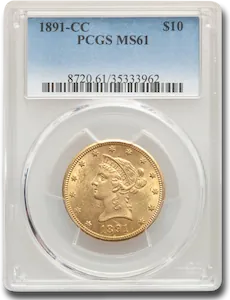
Carson City Mint issues: Any gold coin from Carson City, Nevada (CC mint mark) commands premiums due to Old West romance and limited production. Carson City $20 Liberties in MS-63 often exceed $5,000-10,000.
Morgan Silver Dollars: The Gateway Drug
Morgan dollars (1878-1921) are the most widely collected US coin series. Their large size, beautiful designs, and broad date/mintmark variety create deep collector markets. However, this popularity means careful selection is crucial—common Morgans flood markets while key dates and top grades command premiums.
Key dates: 1893-S, 1895 Proof, 1889-CC, 1892-S, 1893-O drive strong demand. A 1893-S in MS-65 might bring $50,000-100,000.
Common dates, high grades: Even common dates become investment-grade at MS-66+ levels. Population reports show dramatic thinning—a date with 10,000 MS-65 examples might have only 100 MS-67 coins. An MS-67 common date Morgan could be worth $5,000-15,000 while MS-65 trades for $100-200.
Special designations: CAC (Certified Acceptance Corporation) stickers and "+" grades add significant premiums. An MS-65+ CAC Morgan might trade for double the price of a straight MS-65.
Early US Copper: Sleeper Category
Large cents (1793-1857) and half cents (1793-1857) occupy a specialist niche with dedicated collectors and limited fresh supply. High-grade early copper has appreciated substantially over decades.
Draped Bust and Classic Head types: Early designs (1793-1814) in MS grades are genuinely rare. An MS-65 Brown Large Cent from 1794-1807 could bring $10,000-50,000+ depending on variety.
Condition rarity: Most early copper exists in Fine to VF grades. Mint State examples, especially with red or red-brown surfaces, are scarce. The color designation matters enormously—MS-64 Red commands multiples of MS-64 Brown for the same coin.
Mercury Dimes: Small Denomination, Big Investment
Mercury dimes (officially Winged Liberty Head dimes, 1916-1945) designed by Adolph A. Weinman rank among America's most beautiful coins. The key date 1916-D combined with condition rarity in Full Bands (FB) designation creates investment-grade opportunities.
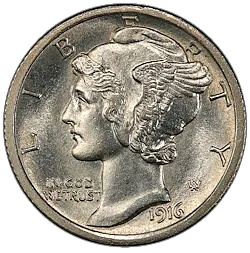
1916-D Mercury Dime: The king of Mercury dimes with only 264,000 minted—a tiny fraction compared to typical millions for other dates. Prices escalate dramatically by grade:
- Good-4: $1,500-2,000
- Very Fine-20: $5,000-7,000
- MS-63: $20,000-30,000
- MS-65: $60,000-100,000
- MS-67: $200,000-300,000
The 1916-D demonstrates grade rarity perfectly. Thousands exist in worn grades (affordable to many collectors), hundreds in low Mint State, perhaps 50-100 in MS-65, and under 20 in MS-67+. Those top pieces are genuinely investment-grade.
Full Bands designation: Mercury dimes receive FB designation when horizontal bands on the fasces (bundle of sticks on reverse) show complete separation. This strike quality is rare on many dates. An MS-65 FB often trades for 2-5x more than MS-65 without FB designation.
Other key dates: 1921, 1921-D, 1942/1 (overdate), and several others command premiums, especially in FB grades.
Lincoln Cents: Error Coins and Key Dates
Lincoln cents (1909-present) offer accessible entry to rare coin investing. While modern Lincoln cents hold minimal premium, key dates and major errors create substantial value.
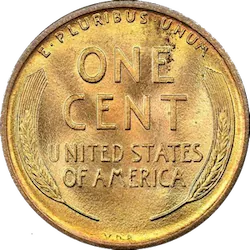
1909-S VDB Lincoln Cent: The most famous Lincoln cent, this inaugural year San Francisco issue features designer Victor David Brenner's initials (VDB) on the reverse. Public controversy led to removal after only 484,000 were struck—minuscule for a cent.
Values by grade:
- Very Good-8: $800-1,000
- Fine-12: $1,200-1,500
- MS-63: $2,000-2,500
- MS-65 Red: $5,000-8,000
- MS-67 Red: $50,000-100,000
The color designation (Red, Red-Brown, Brown) dramatically affects value. MS-65 Red might be worth 3-5x MS-65 Brown. Full red original color is scarce for copper coins over 100 years old.
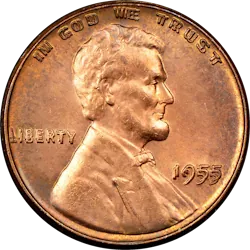
1955 Doubled Die Obverse: The most famous US error coin, this Philadelphia Mint cent shows dramatic doubling on "LIBERTY" and date from die hub misalignment during production. The error is visible to naked eye, making it highly collectible.
Approximately 20,000-24,000 examples entered circulation before discovery. Values:
- Very Fine-20: $1,200-1,500
- MS-63: $2,000-2,500
- MS-65: $3,500-5,000
- MS-67: $15,000-30,000
The 1955 DDO demonstrates how errors create value. Common date 1955 cents are essentially worthless in any grade. The error transforms it into a four-figure coin even in circulated condition.
Other key Lincoln cents: 1909-S (no VDB), 1914-D, 1922 Plain (no D), 1931-S, 1972 DDO, and others. Modern errors like 1982-D Small Date copper and 1992-D Close AM also command premiums.
Type Coins: Building Complete Sets
Rather than collecting every date and mint mark in a series, type collecting focuses on acquiring one example of each major design. A complete type set of US coinage from 1792-present might include 100-150 coins depending on how minor varieties are counted.
Type sets appeal to investors because they provide broad exposure to US numismatic history without requiring hundreds of coins. Focusing on high-grade type coins (MS-65+, Proof-65+) creates investment-grade portfolio.
Gold type set: One example each of $1, $2.50, $3, $5, $10, and $20 gold in various design types. A complete gold type set in MS-64 might cost $50,000-100,000.
Silver type set: Half dimes, dimes, quarters, half dollars, and dollars in major design types. MS-65 silver type set: $20,000-50,000.
Registry sets: PCGS and NGC maintain online registry sets where collectors compete for finest sets. Registry competition drives premium prices for finest-known examples as collectors pursue rankings.
Understanding Professional Grading
The Major Grading Services
PCGS (Professional Coin Grading Service): Founded 1986, PCGS is the market leader for most US coins. PCGS-graded coins often command slight premiums over NGC for the same grade due to market perception. The PCGS Population Report tracks how many coins exist at each grade level, providing transparency on rarity.
NGC (Numismatic Guaranty Corporation): Founded 1987, NGC is PCGS's main competitor with comparable market acceptance. NGC grades more world coins and ancients than PCGS. For US coins, PCGS and NGC are essentially equivalent, though collector preference varies by series.
CAC (Certified Acceptance Corporation): Founded by John Albanese (PCGS co-founder), CAC provides additional verification for PCGS/NGC coins. CAC stickers indicate coins are solid or premium quality for the grade. CAC approval adds 10-50% premiums depending on coin and grade.
ANACS: Older service (founded 1972 by American Numismatic Association) with less market acceptance for high-value coins. ANACS fills niche for problem coins and varieties but isn't preferred for investment-grade material.
The 70-Point Grading Scale
Modern numismatic grading uses Sheldon scale from 1-70:
Circulated grades (1-59):
- Good-4 to Good-6: Heavy wear, major details visible
- Very Good-8 to VG-10: Moderate wear, all major details clear
- Fine-12 to Fine-15: Light to moderate wear, good detail
- Very Fine-20 to VF-35: Light wear, most detail sharp
- Extremely Fine-40 to XF-45: Minimal wear on highest points
- About Uncirculated-50 to AU-58: Slight wear, nearly full luster
Mint State/Proof grades (60-70):
- MS/PR-60 to 62: Uncirculated but heavily bagmarked or weak strike
- MS/PR-63 to 64: Choice, attractive, moderate contact marks
- MS/PR-65 to 66: Gem quality, minor imperfections
- MS/PR-67 to 68: Superb, very few marks, exceptional eye appeal
- MS/PR-69 to 70: Perfect or near-perfect
Investment-grade material typically starts at MS/PR-64 and concentrates at MS/PR-65 and higher. The MS-67+ category represents finest-known territory where populations are tiny and prices exponential.
Special Designations That Add Value
Full Bands (FB): Mercury dimes with complete band separation
Full Bell Lines (FBL): Franklin half dollars showing complete bell lines
Full Steps (FS): Jefferson nickels with complete step detail on Monticello
Cameo/Deep Cameo: Proof coins with frosted devices and mirror fields
Plus (+) grades: PCGS/NGC occasionally assign "+" to coins at the high end of grade but not quite next level. MS-65+ trades between MS-65 and MS-66 prices.
These designations indicate exceptional strike quality and can double or triple coin values compared to same grade without designation.
Market Dynamics and Liquidity
Where Investment Coins Trade
Major auction houses: Heritage Auctions, Stack's Bowers, GreatCollections, and Legend Rare Coin Auctions handle most high-end rare coin transactions. These platforms provide price discovery, broad buyer bases, and authentication confidence.
Dealer networks: Specialized rare coin dealers maintain inventory and provide liquidity. Spreads (difference between buy and sell prices) typically run 10-20% for liquid material, wider for esoteric pieces.
Online marketplaces: eBay hosts enormous rare coin trading volume but requires extreme caution—counterfeits are rampant. Only buy from sellers with exceptional feedback selling primarily certified coins with return privileges.
Coin shows: Major shows (FUN, ANA, Long Beach) feature hundreds of dealers and provide opportunities to view coins before buying. Shows remain important for serious collectors despite online growth.
Transaction Costs
Auction premiums: Buyers typically pay 15-20% buyer's premium on hammer price. Some auctions charge seller's commission (0-10%). Total transaction costs can reach 20-30% round trip.
Dealer spreads: Expect dealers to buy at 10-20% below retail and sell at full retail. This built-in spread is cost of liquidity—immediate buying or selling versus waiting for perfect auction timing.
Grading fees: PCGS/NGC charge $20-200+ per coin depending on declared value and service level. Factor grading costs into acquisition prices, especially for lower-value coins.
Liquidity Considerations
Investment-grade coins are less liquid than stocks or bonds but more liquid than real estate or private equity. Selling quality certified material through major auctions typically takes 2-4 months from consignment to payment. Selling to dealers provides immediate liquidity at wholesale prices (typically 70-90% of retail).
Key liquidity factors:
- Popular series (Morgan dollars, gold, Lincoln cents) sell faster than esoteric material
- PCGS/NGC certification dramatically improves liquidity versus raw coins
- Top grades (MS-66+) attract more competitive bidding than mid-grades
- Well-known key dates have established markets; obscure rarities may lack buyers
Building an Investment-Grade Collection: Strategic Approaches
Quality Over Quantity
The fundamental rule: Buy the best quality you can afford in series you understand. Three $10,000 gem coins appreciate better and sell easier than thirty $1,000 mid-grade pieces. Market rewards quality—finest examples surge during bull markets and hold value during corrections.
Specialization Develops Expertise
Deep knowledge in narrow areas beats superficial knowledge across all series. Choose 2-3 collecting areas: perhaps Morgan dollars, classic commemoratives, and type gold. Master those series—learn population reports, auction history, grading nuances, and market cycles.
Specialization enables recognizing opportunities others miss and avoiding mistakes others make. The best numismatic investors are specialists, not generalists.
Population Reports Guide Decisions
PCGS and NGC publish population reports showing how many coins they've graded at each level. These reports are essential research tools. Before buying, check:
- How many exist at this grade?
- How many grade higher?
- What's the population trend (growing or stable)?
- What's the price history for this grade?
A coin with 10 examples in MS-67 and only 2 in MS-68 presents different opportunity than one with 1,000 MS-67 and 500 MS-68.
Buy During Market Weakness
Rare coin markets experience cycles. The late 1980s boom, early 1990s crash, 2000s recovery, 2008 financial crisis dip, and subsequent recovery demonstrate recurring patterns. Buying during weakness when collectors are forced sellers provides best entry points.
However, don't try timing exact bottoms—buy quality material at fair prices over time rather than waiting for perfect moments that may never arrive.
Hold Long-Term
Rare coins are long-term investments. Transaction costs (15-30% round trip), market cycles, and appreciation timelines mean holding periods should be 5-10+ years minimum. Frequent trading in numismatics destroys returns through transaction costs.
Diversify Within Numismatics
Even within rare coins, diversify across series, metals, and denominations. Don't put all capital into one date or type. A balanced portfolio might include:
- 40% classic US gold (wealth preservation + numismatic premium)
- 30% key date silver (Morgan dollars, Mercury dimes, etc.)
- 20% type coins in gem grades (broad historical exposure)
- 10% error coins or special opportunities
Risks in Rare Coin Investing
Counterfeit Epidemic
High-value coins attract counterfeiters. Chinese operations produce sophisticated fakes. Only buying certified coins from major services (PCGS/NGC) provides reasonable protection, though even certified holders are occasionally counterfeited.
Grading Subjectivity
Grading has subjective elements. The same coin submitted multiple times might grade MS-65, MS-66, MS-65 across submissions. This gradeflation risk means a coin might be overgraded, which becomes apparent when resubmitted or resold.
Conversely, undergraded coins present opportunities—buying MS-64 coins with MS-65 quality for resubmission, though success isn't guaranteed.
Market Cycle Risk
Rare coins experience boom-bust cycles. Buying at market peaks (1989-90, for instance) led to decades of poor returns for many collectors. Understanding market psychology and buying during weak periods reduces this risk.
Illiquidity
Compared to stocks (sell instantly), rare coins require time to liquidate at retail prices. Auctions take months. Dealer sales provide immediate liquidity but at wholesale discounts.
Storage and Insurance
Valuable coins require secure storage (quality safe or bank vault) and insurance coverage. Homeowner's policies typically cap collectibles at $1,000-2,000; additional coverage is essential. These ongoing costs reduce net returns.
Tax Treatment
Coins are collectibles subject to maximum 28% long-term capital gains tax versus 15-20% for stocks. This higher tax rate reduces after-tax returns compared to other investments.
Conclusion: Rare Coins as Alternative Assets
Investment-grade rare coins offer genuine diversification, tangible assets with historical significance, and appreciation potential documented over decades. The finest examples of key dates in top grades have produced returns rivaling stocks or real estate while providing completely different risk and return characteristics.
Success requires education, patience, quality focus, and long-term perspective. The collectors who thrive are those who genuinely enjoy numismatics—studying grading, researching history, and appreciating artistry—while also making disciplined investment decisions based on market analysis rather than emotion.
Start with education: join ANA (American Numismatic Association), read reference books, study auction catalogs, and attend coin shows. Buy certified coins from reputable sources. Focus on quality over quantity. Specialize in 2-3 areas you find fascinating. And maintain long-term perspective—rare coin investing is measured in years and decades, not months.
For those willing to develop expertise, investment-grade rare coins provide unique opportunity to own tangible pieces of history while building wealth through a market uncorrelated with stocks, bonds, or traditional assets.
Continue your numismatic education: