
Understanding Cryptocurrency: A Complete Guide for Beginners
Cryptocurrency has evolved from a niche technology experiment into a trillion-dollar global financial phenomenon. Whether you're hearing about Bitcoin for the first time or considering your first crypto investment, understanding the fundamentals is essential. This comprehensive guide breaks down everything you need to know about digital currencies, from basic concepts to practical investment strategies.
What is Cryptocurrency and How Does It Work?
Cryptocurrency is digital money that exists entirely online, secured by advanced cryptography rather than physical bills or government backing. Unlike the dollars in your bank account that the Federal Reserve controls, most cryptocurrencies operate on decentralized networks using blockchain technology—a distributed ledger maintained by thousands of computers worldwide.
The revolutionary aspect of cryptocurrency isn't just that it's digital (your credit card transactions are already digital), but that it eliminates the need for trusted intermediaries. When you send money through a bank, that institution verifies you have sufficient funds and processes the transfer. With cryptocurrency, the network itself validates transactions through mathematical consensus, making financial intermediaries unnecessary.
How Blockchain Technology Powers Cryptocurrency
Think of blockchain as a shared spreadsheet that thousands of people maintain simultaneously. Every transaction gets recorded in a "block" containing multiple transactions. Once a block fills up, it's cryptographically sealed and linked to the previous block, forming an unbreakable chain. This is why it's called a blockchain.
What makes this system secure? Three key mechanisms work together:
Cryptographic hashing: Each block contains a unique digital fingerprint called a hash. Change even one character in a transaction, and the entire hash changes, immediately revealing tampering attempts.
Distributed consensus: Before a new block joins the chain, the majority of network participants must agree it's valid. This prevents any single entity from manipulating transaction records.
Immutability: Once confirmed and added to the blockchain, transactions become virtually impossible to alter. You'd need to control more than 51% of the entire network's computing power to rewrite history—an economically impractical feat for major cryptocurrencies.
When you send Bitcoin to someone, the transaction broadcasts to thousands of nodes (computers running Bitcoin software). Miners—participants who dedicate computing power to process transactions—bundle your transaction with others into a block. They compete to solve complex mathematical puzzles, and the first to succeed adds the block to the blockchain and earns newly created Bitcoin as a reward. Your transaction becomes part of permanent financial history, visible to anyone but pseudonymous.
Is Cryptocurrency a Safe Investment? Understanding the Real Risks
The straightforward answer: cryptocurrency is a high-risk, high-reward investment class that requires careful consideration and risk management. The safety question depends entirely on your financial situation, investment timeline, and risk tolerance.
The Volatility Reality
Cryptocurrency markets operate 24/7 with extreme price swings that would shut down traditional stock exchanges. Bitcoin has experienced multiple 80%+ crashes throughout its history, yet it has also delivered returns exceeding 10,000% over longer timeframes. In 2021, Bitcoin peaked near $69,000, then crashed to $16,000 by late 2022, before recovering above $40,000 in 2024. These aren't minor fluctuations—they're wealth-destroying drops for overleveraged investors and generational opportunities for disciplined buyers.
Altcoins (alternative cryptocurrencies beyond Bitcoin) exhibit even more extreme volatility. A coin can surge 500% in weeks based on social media hype, then lose 90% when enthusiasm fades. This volatility stems from relatively small market sizes, speculative trading, regulatory uncertainty, and the technology's early developmental stage.
Security Risks You Must Address
Unlike bank accounts with FDIC insurance, cryptocurrency holdings have no government protections. If someone steals your crypto or you lose your private keys, your funds are gone permanently. No customer service hotline can reverse blockchain transactions.
Exchange hacks represent a persistent threat. Mt. Gox, once handling 70% of Bitcoin trades, collapsed in 2014 after losing 850,000 BTC to hackers. More recently, FTX's spectacular implosion in 2022 wiped out billions in customer funds through fraud rather than hacking, demonstrating that centralized platforms pose both technical and trust risks.
Essential security practices every crypto investor must follow:
Enable two-factor authentication (2FA) on every exchange account using an authenticator app, not SMS. Text message 2FA is vulnerable to SIM swapping attacks where hackers hijack your phone number.
Use hardware wallets for significant holdings. These physical devices store your private keys offline, immune to online hacking attempts. Popular options include Ledger and Trezor devices, which cost $60-200 but protect potentially unlimited crypto value.
Never keep large amounts on exchanges. Think of exchanges like public WiFi—convenient for transactions but not secure for storage. The "not your keys, not your coins" principle means you don't truly own cryptocurrency unless you control the private keys.
Verify receiving addresses carefully. Malware can replace copied addresses with attacker addresses. Always confirm the first and last few characters of addresses before sending transactions.
Beware of phishing and scams. Cryptocurrency's irreversible nature makes it scammer paradise. No legitimate company will ever ask for your private keys or seed phrase. Be especially suspicious of social media giveaways, Ponzi schemes promising guaranteed returns, and unsolicited investment opportunities.
Regulatory and Legal Uncertainties
Cryptocurrency regulation remains a patchwork globally. Some countries embrace it, others ban it entirely, and most are still figuring out appropriate frameworks. The United States treats cryptocurrency as property for tax purposes, creating reporting obligations many investors underestimate. Future regulatory crackdowns could significantly impact prices and accessibility.
Smart Investment Strategies for Managing Risk
Only invest money you can afford to lose completely. This isn't hyperbole—cryptocurrencies can and do go to zero. Your crypto allocation should reflect your overall financial health, with essential expenses, emergency funds, and retirement savings taking priority.
Dollar-cost average rather than lump sum investing. Instead of buying $5,000 of Bitcoin at once, spread purchases over months. This strategy reduces timing risk in volatile markets and prevents the psychological devastation of buying at a peak.
Diversify beyond just cryptocurrency. Crypto should be one component of a broader investment portfolio including stocks, bonds, real estate, and other assets. Even within crypto, diversification between established coins (Bitcoin, Ethereum) and carefully selected altcoins can reduce single-asset risk.
Develop an exit strategy before investing. Decide in advance at what price points you'll take profits or cut losses. Emotional decision-making during extreme volatility leads to buying high and selling low—the opposite of successful investing.
Continuously educate yourself. The cryptocurrency landscape evolves rapidly. What was true about regulations, technology, or market dynamics six months ago may be outdated. Follow reputable news sources, understand the projects you invest in, and remain skeptical of hype.
How to Buy and Sell Cryptocurrency: Step-by-Step Guide
Purchasing cryptocurrency has become significantly easier than in Bitcoin's early days, when it required technical knowledge and sketchy payment methods. Today, regulated exchanges offer user-friendly platforms rivaling traditional brokerage accounts.
Step 1: Choose a Cryptocurrency Exchange
Your exchange selection significantly impacts your experience and security. Consider these factors:
Coinbase: Best for absolute beginners. The interface is intuitive, customer support is responsive, and it's publicly traded with regulatory compliance. Fees are higher than competitors, but the ease of use justifies costs for new users. Coinbase also offers a more advanced platform (Coinbase Pro) with lower fees once you're comfortable.
Binance.US: Offers lower trading fees and a wider selection of cryptocurrencies. The interface is more complex, better suited for users with some experience. Binance is the world's largest exchange by volume, though it has faced regulatory scrutiny.
Kraken: Balances security, reasonable fees, and a good selection of cryptocurrencies. Popular among more experienced traders who want advanced features like margin trading and staking.
Gemini: Founded by the Winklevoss twins, Gemini emphasizes security and regulatory compliance. Fees are moderate, and it's particularly strong for US-based investors.
Avoid unregulated offshore exchanges, especially as a beginner. The marginally lower fees aren't worth the elevated risks of fraud, hacks, or losing access to your funds.
Step 2: Create and Verify Your Account
Reputable exchanges require identity verification to comply with anti-money laundering (AML) and know-your-customer (KYC) regulations. You'll need to provide:
- Full legal name and address
- Government-issued photo ID (driver's license or passport)
- Sometimes a selfie or proof of address (utility bill)
Verification typically takes minutes to a few days. While some users resist KYC requirements, they're necessary for legitimate exchanges and actually protect investors by reducing fraud.
Step 3: Secure Your Account Immediately
Before depositing any money, enable two-factor authentication. Use Google Authenticator or Authy rather than SMS codes. Set up withdrawal address whitelisting if your exchange offers it—this prevents attackers from withdrawing to new addresses even if they breach your account.
Step 4: Deposit Funds
Most exchanges accept several deposit methods:
Bank transfer (ACH): Lowest fees but takes 3-5 business days. Best for planned purchases without urgency.
Wire transfer: Faster (often same day) but with fees typically $10-30. Useful for larger deposits where percentage fees on other methods would be expensive.
Debit/credit card: Instant but expensive (usually 3-4% fees). Reserve for situations requiring immediate purchases.
PayPal: Some exchanges now support PayPal funding, though fees remain relatively high and not all coins are available through this method.
Step 5: Make Your First Purchase
Navigate to the trading interface and select your desired cryptocurrency. You'll typically see two order types:
Market orders: Execute immediately at the current market price. Simple but you'll pay whatever the market demands at that instant, which can be unfavorable during volatile periods.
Limit orders: You specify your maximum purchase price. The order only executes if the market reaches your price. This gives you better control but requires patience and market awareness.
For beginners, market orders work fine for small amounts. As your sophistication grows, limit orders help optimize entry points.
Step 6: Secure Your Cryptocurrency (Critical Step)
Once purchased, your cryptocurrency sits in the exchange's wallet—which is convenient but risky. For holdings you don't plan to trade frequently, transfer coins to a personal wallet you control.
Software wallets (hot wallets): Apps like Exodus or Trust Wallet install on your phone or computer. Convenient for smaller amounts and regular transactions but vulnerable to device compromise.
Hardware wallets (cold wallets): Physical devices that store private keys offline. Essential for significant holdings. Despite the upfront cost, a hardware wallet is the single best security investment for any serious crypto holder.
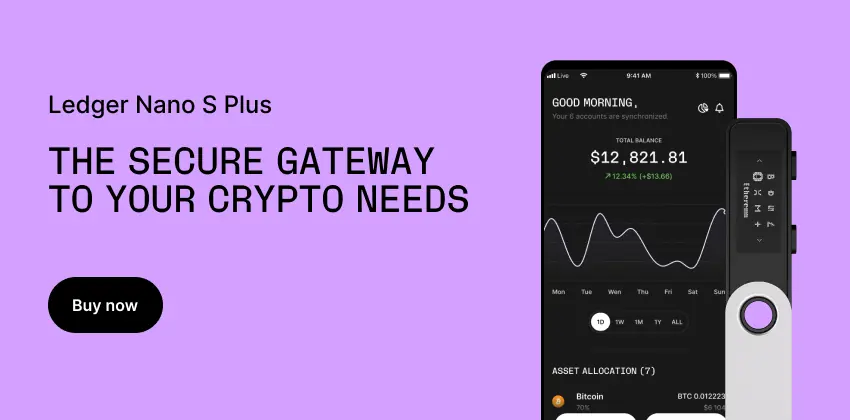
When transferring to your wallet, always send a small test transaction first to verify you have the correct address. Cryptocurrency transactions are irreversible—sending to a wrong address means permanent loss.
How to Sell Cryptocurrency
Selling reverses the purchase process. Transfer your cryptocurrency from your personal wallet back to the exchange, navigate to the sell interface, specify the amount, and execute the trade. The proceeds appear as fiat currency in your exchange account, which you can then withdraw to your bank account.
Timing sales requires strategy. Many investors fail to take profits during bull runs, watching gains evaporate when markets reverse. Consider taking partial profits at predetermined price targets rather than trying to time absolute peaks. For tax efficiency, be mindful of holding periods—many jurisdictions tax long-term holdings (over one year) more favorably than short-term trades.
The Most Important Cryptocurrencies You Should Know
Over 20,000 cryptocurrencies exist, but most lack real utility or staying power. Understanding the major players provides essential market context.
Bitcoin (BTC): Digital Gold
Bitcoin remains the flagship cryptocurrency, commanding roughly 50% of total crypto market capitalization. Created in 2009 by the pseudonymous Satoshi Nakamoto, Bitcoin pioneered blockchain technology and established cryptocurrency as a legitimate asset class.
Bitcoin's value proposition centers on scarcity and security. Only 21 million Bitcoin will ever exist, with approximately 19.5 million already mined. This hard cap, enforced by consensus rules, makes Bitcoin deflationary—unlike fiat currencies subject to unlimited printing. Bitcoin's security comes from its enormous network hashrate; attacking it would require computational resources costing billions of dollars.
Institutional adoption has accelerated recently. Companies like MicroStrategy and Tesla hold Bitcoin on their balance sheets. Bitcoin ETFs launched in early 2024, enabling traditional investors to gain exposure without directly holding cryptocurrency. El Salvador adopted Bitcoin as legal tender in 2021, a controversial experiment in sovereign cryptocurrency adoption.
Bitcoin's limitations include relatively slow transaction speeds (roughly 7 transactions per second versus Visa's thousands) and energy-intensive proof-of-work mining. However, layer-2 solutions like the Lightning Network address scalability while maintaining security. Bitcoin's simple, proven model makes it the lowest-risk cryptocurrency investment, though "low-risk" remains relative in this volatile market.
Ethereum (ETH): The World Computer
Ethereum represents the second generation of blockchain technology. While Bitcoin focuses on being peer-to-peer money, Ethereum provides a platform for decentralized applications through smart contracts—self-executing code that runs on the blockchain.
Smart contracts enable programmable money and automated agreements without intermediaries. Want to create a lending protocol where users borrow against cryptocurrency collateral with interest rates determined algorithmically? Build it on Ethereum. Want to create digital art with automatic royalty payments to the original creator on every resale? Ethereum makes it possible. This versatility spawned an entire ecosystem of decentralized finance (DeFi) applications, NFT marketplaces, and blockchain games.
Ethereum transitioned from energy-intensive proof-of-work to proof-of-stake consensus in September 2022 (an event called "The Merge"), reducing energy consumption by 99.95% and laying groundwork for future scalability improvements. Ethereum 2.0 upgrades continue rolling out, aiming to handle thousands of transactions per second while maintaining decentralization.
The Ethereum ecosystem's strength is its network effect. Most blockchain developers build on Ethereum because that's where users, liquidity, and tools already exist. This creates a self-reinforcing cycle, though emerging "Ethereum killers" like Solana and Avalanche offer competition through higher speeds and lower fees.
Binance Coin (BNB): Exchange Utility Token
BNB originated as a utility token for the Binance exchange, offering users discounted trading fees. It has since expanded to power Binance Smart Chain (now BNB Chain), a separate blockchain supporting decentralized applications with lower fees than Ethereum.
BNB's value ties directly to Binance's success as the world's largest cryptocurrency exchange. Binance regularly "burns" (permanently destroys) BNB tokens, reducing supply to create deflationary pressure. However, regulatory uncertainties surrounding Binance create risks for BNB holders. The SEC has targeted Binance with lawsuits, and some countries have restricted the exchange's operations.
Cardano (ADA): The Academic Approach
Cardano distinguishes itself through peer-reviewed research and a methodical development approach. Founded by Charles Hoskinson (an Ethereum co-founder), Cardano aims to provide a more sustainable and scalable blockchain through its proof-of-stake consensus mechanism.
Cardano's development philosophy prioritizes formal verification and academic rigor over rapid iteration. Critics argue this makes progress too slow, while supporters believe it will result in superior long-term architecture. Smart contract functionality launched in 2021, years behind Ethereum, but the ecosystem has been growing with DeFi applications and NFT projects.
Solana (SOL): The High-Performance Challenger
Solana burst onto the scene with impressive performance claims: 50,000+ transactions per second with sub-second finality and minuscule fees. This performance attracted developers building decentralized exchanges, NFT marketplaces, and games requiring fast, cheap transactions.
However, Solana has faced criticism for network instability (multiple multi-hour outages) and arguably excessive centralization compared to Bitcoin or Ethereum. The FTX collapse in 2022 particularly impacted Solana, as Sam Bankman-Fried and Alameda Research were major backers. Despite these setbacks, Solana's technical capabilities keep it relevant as developers seek alternatives to Ethereum's higher costs.
Stablecoins: The Dollar Bridge
Stablecoins deserve mention despite not being investment vehicles. These cryptocurrencies maintain a stable value (typically $1) by backing tokens with fiat reserves or algorithmic mechanisms. Tether (USDT) and USD Coin (USDC) are the largest, collectively worth over $100 billion.
Stablecoins serve as the primary on-ramp and off-ramp for crypto trading. Rather than converting to fiat between trades, traders hold stablecoins, enabling instant deployment when opportunities arise while avoiding cryptocurrency volatility. They're also crucial for DeFi, providing stable lending, borrowing, and liquidity provision.
How Are Cryptocurrencies Taxed? What Every Investor Must Know
Cryptocurrency tax obligations surprise many new investors. The IRS and most tax authorities worldwide treat cryptocurrency as property, not currency, which creates significant reporting requirements and tax liability.
Taxable Events You Need to Track
Understanding what triggers taxes is crucial:
Selling cryptocurrency for fiat currency: If you bought Bitcoin at $30,000 and sold at $40,000, you realized a $10,000 capital gain subject to taxes. Short-term gains (assets held under one year) are taxed as ordinary income at your marginal tax rate. Long-term gains (over one year) receive preferential rates, typically 0%, 15%, or 20% depending on income level.
Trading one cryptocurrency for another: Many investors mistakenly believe only sales to fiat currency are taxable. Trading Bitcoin for Ethereum is a taxable event. You're effectively selling Bitcoin and buying Ethereum, realizing any gains or losses on the Bitcoin side.
Using cryptocurrency to purchase goods or services: Paying for a Tesla with Bitcoin triggers capital gains tax on the Bitcoin's appreciation since you acquired it. Every purchase requires calculating your cost basis and current value.
Receiving cryptocurrency as income: Mining rewards, staking income, airdrops, and cryptocurrency wages count as ordinary income at fair market value when received. If you mined 1 Ethereum when it was worth $2,000, that's $2,000 of income regardless of whether you sold it. When you eventually sell, you'll also owe capital gains tax on any appreciation above that $2,000 cost basis.
What's Not Taxable (Important Exceptions)
Buying cryptocurrency with fiat currency: Simply purchasing doesn't trigger taxes. You only pay taxes when disposing of crypto at a gain.
Transferring between your own wallets: Moving Bitcoin from Coinbase to your hardware wallet isn't taxable since you're not disposing of the asset.
Holding cryptocurrency: Unrealized gains (paper gains on assets you still hold) aren't taxed until you sell. This creates an incentive for long-term holding both for better tax rates and deferring liability.
Record-Keeping Requirements
Accurate records are essential and often overlooked. For every cryptocurrency transaction, you need:
- Date and time of acquisition and disposal
- Amount of cryptocurrency involved
- Fair market value in USD at transaction time
- Purpose of transaction (trade, purchase, payment, etc.)
- Which specific units you're selling (for FIFO, LIFO, or specific identification methods)
Exchanges provide some transaction history, but you're responsible for comprehensive records if you trade across multiple platforms or use decentralized exchanges. Crypto tax software like CoinTracker, Koinly, or CryptoTrader.Tax can import transactions and calculate tax liability, saving hours of manual spreadsheet work.
Handling Losses Strategically
Capital losses offset capital gains dollar-for-dollar. If you gained $10,000 on Bitcoin but lost $4,000 on Ethereum, your net taxable gain is $6,000. Losses also offset up to $3,000 of ordinary income annually in the US, with excess losses carrying forward to future years.
This creates tax-loss harvesting opportunities. If you hold cryptocurrency with unrealized losses, selling before year-end captures the loss for tax purposes. Unlike stocks (where wash-sale rules prevent repurchasing the same security within 30 days), cryptocurrency doesn't currently face wash-sale restrictions. You can sell at a loss and immediately repurchase to maintain your position while capturing the tax benefit—though this loophole may close as regulations tighten.
International Tax Considerations
Tax treatment varies globally. Some countries don't tax cryptocurrency gains at all (Portugal, for example, though this is changing). Others like Germany exempt gains on cryptocurrency held over one year. UK taxpayers face capital gains tax similar to the US but with different allowances and rates.
If you're a US citizen, you're taxed on worldwide income regardless of where you live or where your exchange is based. Failing to report foreign cryptocurrency holdings can result in severe penalties beyond just the unpaid taxes.
The Bottom Line on Crypto Taxes
Cryptocurrency tax compliance is complex enough that consulting a tax professional familiar with digital assets is worth the cost, especially if you're actively trading or your holdings are substantial. The IRS has increasingly focused on cryptocurrency tax evasion, obtaining exchange records through court orders and sending warning letters to thousands of taxpayers.
Ignorance isn't an acceptable defense. The IRS has asked about cryptocurrency holdings on standard tax forms since 2019, making taxpayers explicitly attest to their reporting. Underreporting can result in penalties, interest, and even criminal prosecution in extreme cases.
Final Thoughts: Should You Invest in Cryptocurrency?
Cryptocurrency represents a genuine financial innovation with the potential to reshape money, but it's not appropriate for everyone. Before investing, honestly assess:
- Can you afford to lose 50-100% of your investment without financial hardship?
- Do you have the psychological fortitude to hold through 70%+ drawdowns?
- Are you willing to invest time learning about the technology and markets?
- Can you resist FOMO (fear of missing out) and emotional decision-making?
If you answered no to any of these questions, cryptocurrency may not suit your situation. There's no shame in sitting out—missing potential gains is better than taking excessive risk with money you can't afford to lose.
For those who do invest, approach cryptocurrency as a long-term speculation, not a get-rich-quick scheme. Start small, learn continuously, prioritize security, and maintain realistic expectations. The cryptocurrency market is maturing, but it remains volatile and unpredictable. The most successful crypto investors are those who survive long enough to benefit from the technology's growth—and survival requires discipline, education, and proper risk management.